

Accurate component dosing is the key to engine oil production, according to Forsage. We visited the Forsage Lubricants plant in Lipetsk, where Russian lubricants are produced with the aim of competing with global brands.
Mikhail OzherelyevForsage Lubricants' own production site is on the outskirts of Lipetsk. The plant opened on 27 May 2022 and is designed to produce 450 tonnes of finished oils per month. Its capacity is modest, comparable to Nordoil in Taldom near Moscow, while the level of production automation is no lower than at the former Shell plant in Torzhok (now owned by Teboil). The Lipetsk team sees no surprise in this: competing with global brands requires a particular approach to quality.
The plant’s product range includes oils for light vehicles and heavily loaded vehicles.
Forsage Lubricants is part of the Forsage Group, an established participant in the Russian lubricants market and an official distributor of Rosneft, Valvoline and Obninskorgsintez products in the Central Black Earth Region. The company has sold automotive and industrial oils since 2001 and has supplied NLMK for more than 15 years. According to Konstantin Shilov, General Director of Forsage LLC, establishing its own production facilities was a logical step in the development of the business.
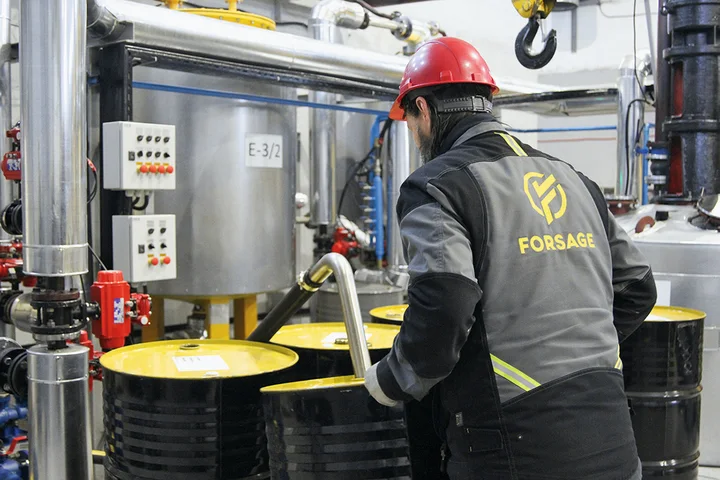
The plant is designed to produce 450 tonnes of finished oils per month when operating a single shift.
“As the market and our customers became more demanding and discerning, quality and range became key questions. Seven years ago, we decided to establish our own production facility and purchased land for the project,” said Konstantin Vladimirovich.
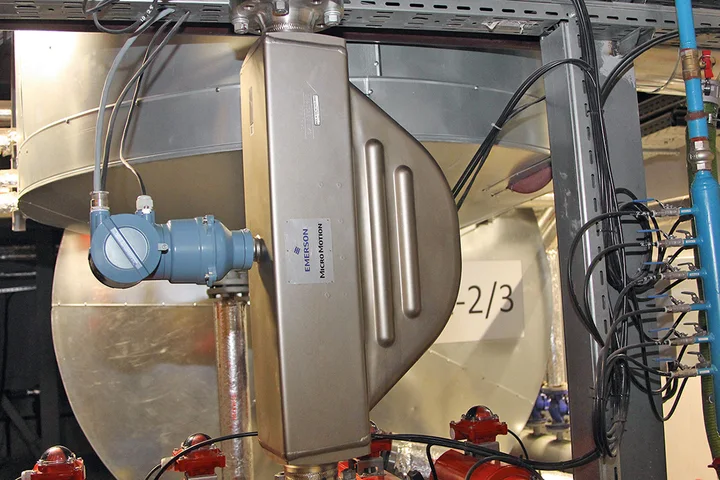
A Coriolis flow meter measures a specified quantity of liquid by mass, independently of density and temperature.
Construction of the plant took three years. Designers, installation contractors and equipment suppliers were selected carefully. The machinery and equipment, including the automation systems, are Russian-made. The only imported purchases were valves, shut-off fittings and sensors.
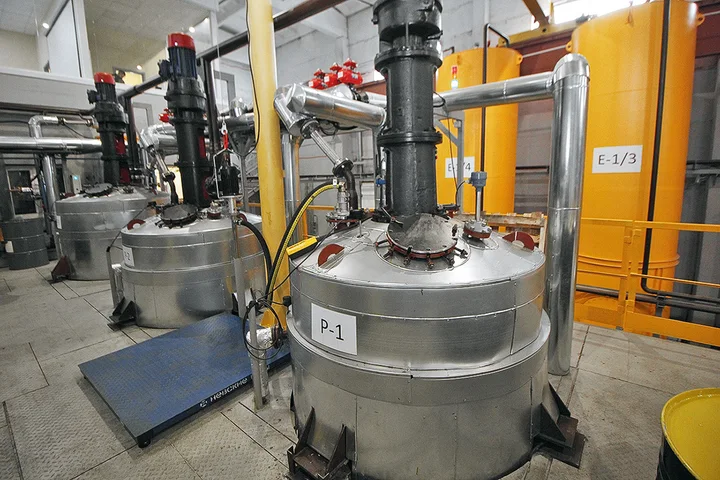
Base oil is blended with additives in the reactor.
The plant produces oils for light vehicles and heavily loaded vehicles, as well as industrial products: hydraulic, turbine and gear oils and other fluids — more than 65 products in total. Industrial oils, including products for commercial vehicles, account for up to 70% of production volume. Engine oils (Forsage Diesel Force Standart, Premium and Ultra) and transmission oils (Forsage Trans Force GL-4, GL-5) are offered specifically for commercial vehicles.
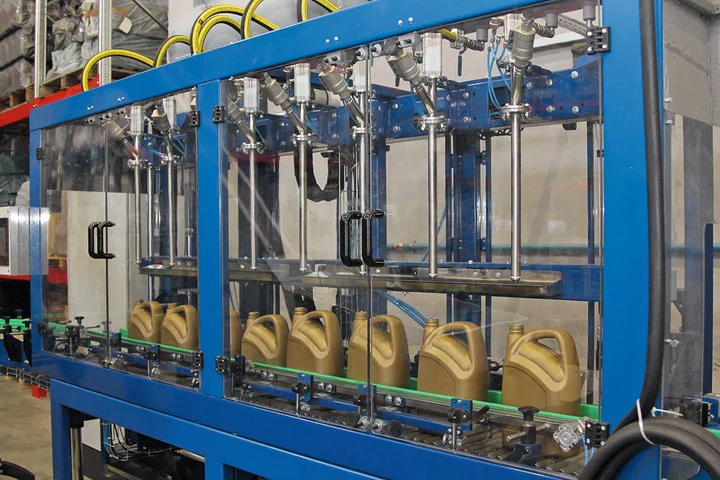
A Russian-made filling station.
QUALITY AND CREATIVITY
“Making high-quality oil is a creative process,” says Konstantin Shilov. Producing an excellent product requires three things: high-quality components, strict adherence to the process, and accurate dosing.
Gazpromneft, Tatneft and Slavneft supply base oils to Lipetsk. Each oil enters the receiving area through a separate pipeline to prevent mixing. Russian and Chinese additives are used, including additive packages. The most widely used domestic ingredients are antifoam additives (siloxanes), pour point depressants (poly(methyl acrylate)) and viscosity improvers. The latter are also used in hydraulic and transmission oils.
Before entering production, all components undergo incoming inspection in the laboratory, where certified properties are checked against actual measurements.
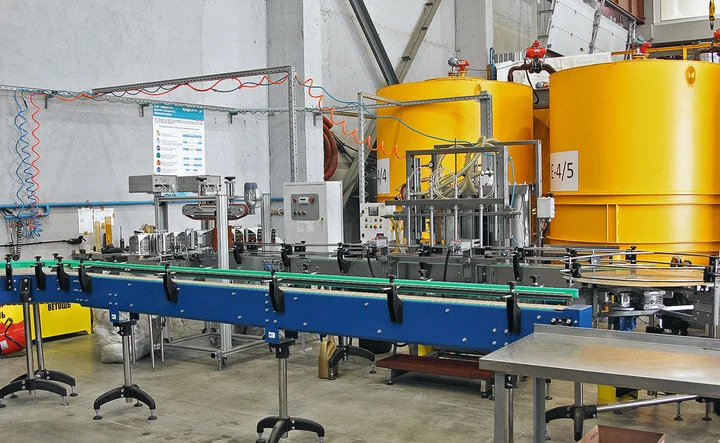
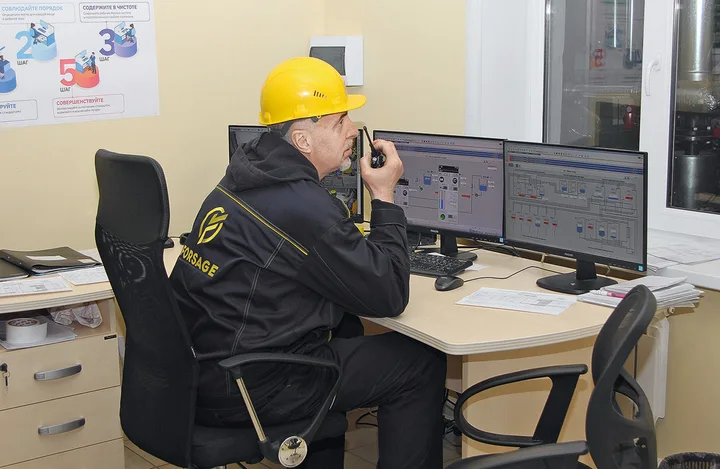
Finished oils are blended in three horizontal tanks, each with a capacity of 23 m3. Base oils are pumped in first and blended according to the formulation. Forsage explains that finished products usually contain several base oils. Accurate dosing is ensured by a Coriolis flow meter, an instrument that measures the required quantity of liquid by mass regardless of density and temperature. Each tank also has load cells that accurately track incoming and outgoing quantities. The information is sent to the control room and monitored by an operator.
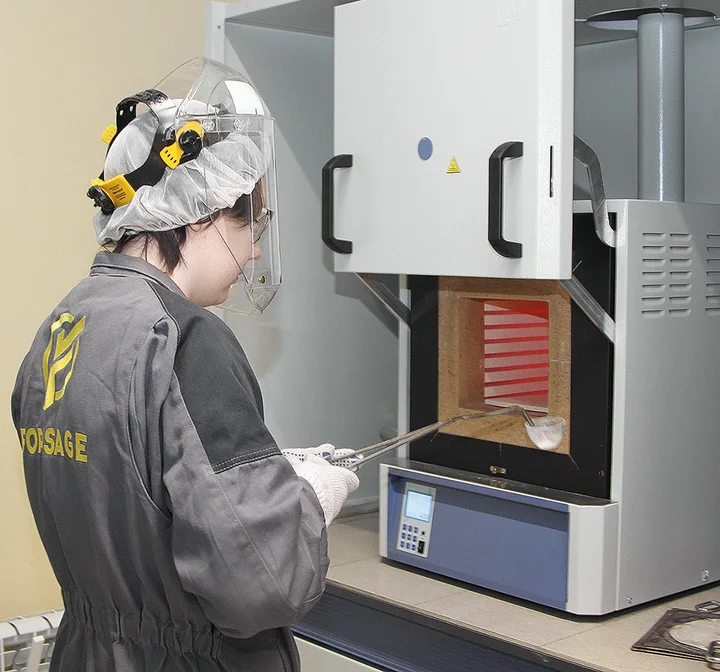
High-temperature testing room. Oils are tested here for ash content and flash point.
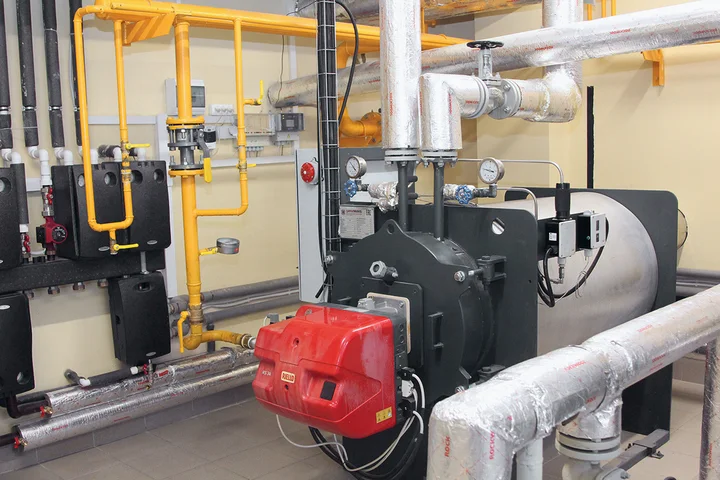
Base oils are mixed by circulation: an external pump moves the liquid through a closed mixer–pump–mixer circuit with a circulation ratio of 1.5. A heat transfer fluid pipe runs inside the tank, with injectors directly above it creating turbulence in the circulating oil to improve mixing. The gas-fired boiler house also deserves a mention: it too is fully automated. Italian Garioni Naval equipment heats the heat transfer fluid to 300 °C, whereas steam boiler systems are limited to 150 °C.
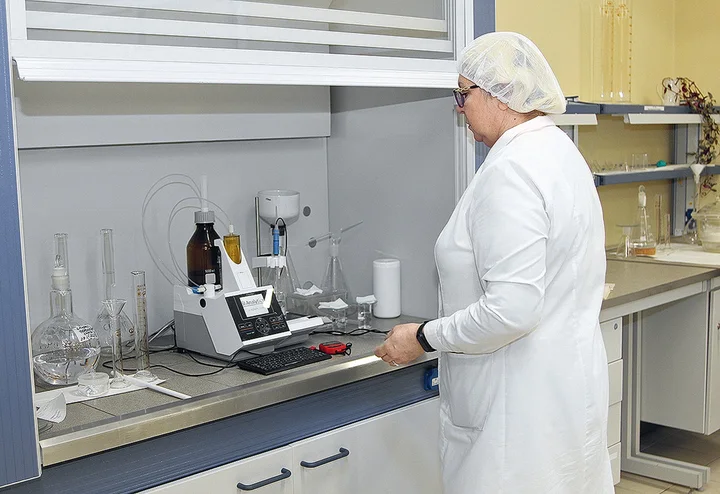
The plant laboratory is the gateway for raw materials entering production.
After the base oils have been blended and heated, the mixture enters a reactor, where additives are introduced. Load cells ensure accurate component dosing. A slow-speed frame agitator mixes the contents, while additional circulation brings the lower layers, beyond the agitator's reach, to the top.
Do not overfill, lose containment or allow a fire — the fundamental rule of industrial safety in petrochemicals. It is strictly observed at the Forsage Lubricants plant. All tanks and vessels have emergency protection, overfill sensors and a venting system: a fan forcibly extracts residual vapours from the reactors.
At the final stage, the finished additive concentrate in base oil is pumped back into the blending vessel, where the whole batch is adjusted to its final specification. Every production batch is tested for quality compliance and accompanied by technical documentation.
LIPETSK PREMIUM
The finished oil follows one of two routes: bulk loading at the loading rack or filling into containers. The filling line is manufactured by MVS Mechatronika (Ufa). The filling station is automated: the operator only needs to set the volume, load empty containers into the designated boxes and monitor the process. The robot positions the container, fills it with oil, seals the neck with anti-counterfeit foil, screws on the cap, applies a label bearing the brand hologram and finally engraves the date, shift and batch number. The filled canisters and drums are then sent for pallet packing.
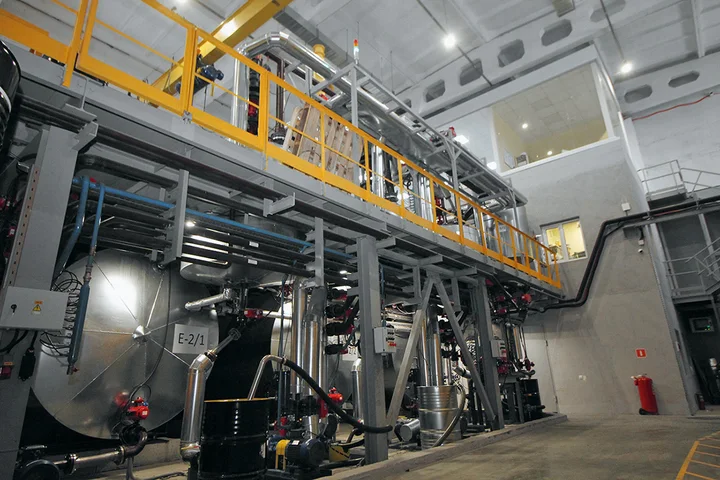
Base oil is blended with additives in reactors. The plant has three of these reactors.
Forsage buys its plastic containers rather than manufacturing them. The canisters are made in Podolsk and are used by many brands. This is, of course, a drawback for protection against counterfeiting. However, the company reported that it had already developed its own mould and that Forsage would soon have an original canister design bearing its brand logo.
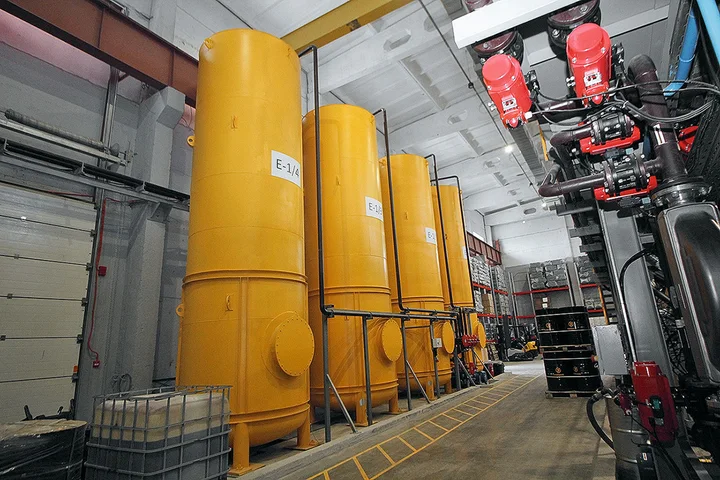
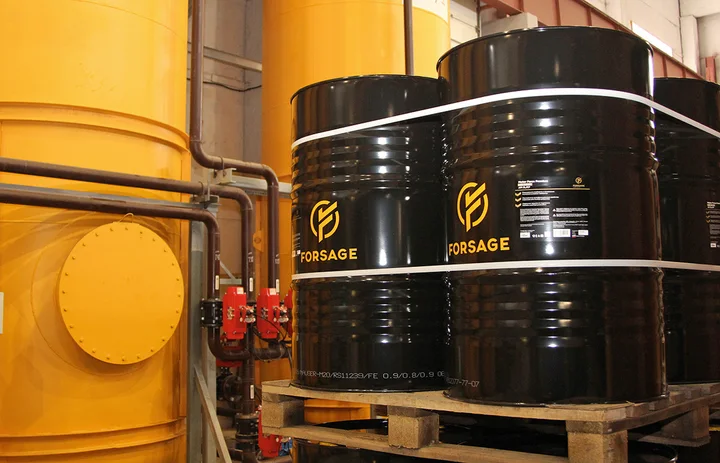
Base oils are stored in vertical tanks.
In Russia, Forsage oils are sold through a dealer network and an online shop. There are plans to supply lubricants to vehicle manufacturers. Contacts have been established with the Lipetsk company Motorinvest and the Moskvich plant. Official approval from Chinese partners is expected.
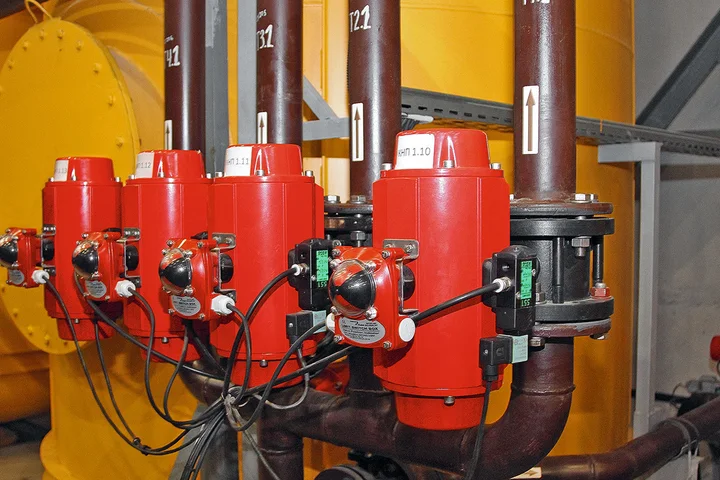
Each product has its own pipeline. Mixing is not permitted.
Forsage oil is in demand both in Russia and among overseas customers. Products from Lipetsk are supplied to Armenia, Kazakhstan and Uzbekistan. The company has also announced plans to build a plant in Tajikistan. “There are no sanctions restrictions in Tajikistan. By starting production there, we will be able to resume supplies to our Asian customers, who are still asking us for oils,” says the General Director of Forsage LLC.

Aleksey Pavlovich,
Head of the oil blending department at Forsage LLC
New product development starts with a request from our sales managers, who work directly with customers. The question is usually whether we can manufacture an equivalent to a required product or select a replacement for specific equipment. We then search for the necessary components. Once all the ingredients have been gathered, we send them to the laboratory, which has a pilot mixer for making a test sample. The sample is checked in-house and also sent to a certified laboratory in Moscow for testing against specific parameters.
If all is well, a pilot batch of lubricant is produced. It is then tested in service in the actual unit. The oil must complete a specified number of operating hours. Tests are then carried out both in our own laboratory and in external laboratories.
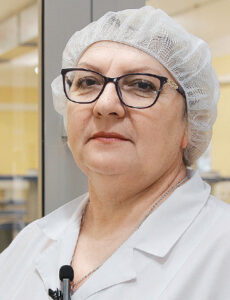
Marina Markova,
head of the Forsage LLC testing laboratory
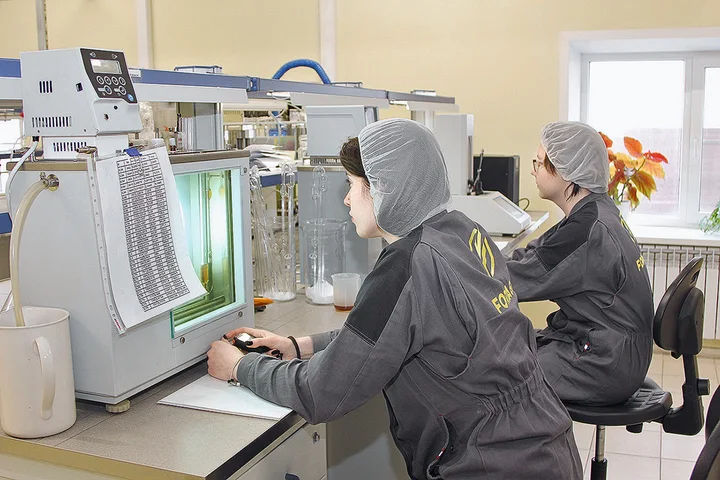
The laboratory monitors product quality continuously through three stages: incoming checks, in-process checks and quality certification of the finished product.
The plant laboratory is the gateway for raw materials entering production. Base oils are tested using standard methods, while additives are checked through a trial formulation. If the data in the additives’ quality certificates match the measured results from the test samples, the additive is cleared for use.
During intermediate checks, each batch is tested twice for compliance with the control parameters. If the result is satisfactory, the sample undergoes a full analysis. A quality certificate is issued for every released batch.
The laboratory also helps develop samples of new products and monitors their quality. For more extensive product testing, samples are sent to the MITs GSM laboratory.